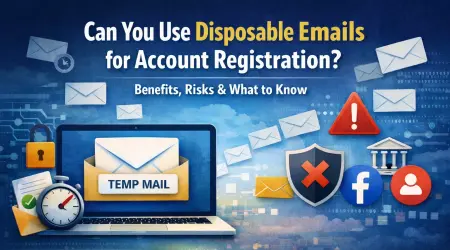
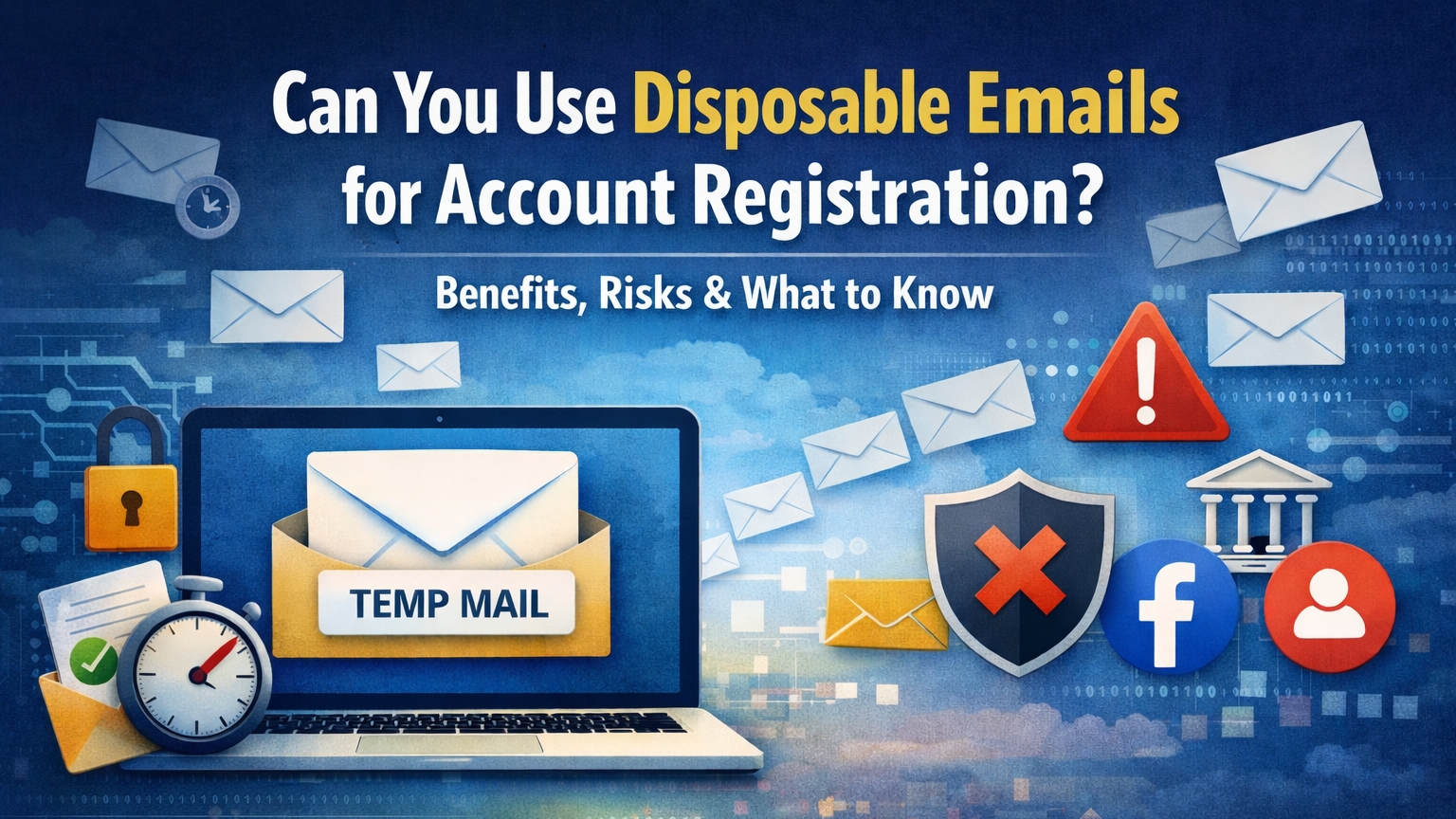
Can You Use Disposable Emails for Account Registration? Benefits, Risks, and What to Know
In today’s digital world, signing up for websites often requires an email address. However, many users prefer not to share their personal inbox to avoid spam, marketing emails, or privacy risks. This is where disposable email addresses come in.
A disposable or temporary email allows you to create an email address that works for a short period of time. These emails can receive verification messages and then automatically expire, making them useful for quick registrations or one-time signups.
But the big question is: can you actually use disposable emails for account registration?
Let’s explore how they work and when they are accepted.
What Is a Disposable Email?
A disposable email is a temporary inbox that allows you to receive emails without creating a permanent account. These services generate random email addresses that remain active for a limited time, often ranging from a few minutes to a few hours.
People commonly use temporary email services for:
Signing up for websites without sharing a personal email
Avoiding spam and promotional newsletters
Accessing download links
Testing account registration systems
Creating temporary accounts
Once the email expires, the inbox and all messages are automatically deleted.
When Disposable Emails Work for Registration
Disposable emails can work on many websites that do not strictly validate email domains. These sites typically only require an email confirmation link or verification code.
You may be able to use temporary email addresses on:
Forums and discussion communities
Free software download websites
Trial registrations
Small web services or tools
Online testing platforms
For these services, the only requirement is receiving the confirmation email, which disposable inboxes can easily handle.
Why Some Websites Block Disposable Emails
Many major websites block disposable email services to prevent spam accounts, fraud, and abuse.
Platforms that commonly restrict temporary emails include:
Social media platforms
Financial services
Subscription services
Large tech platforms
Online marketplaces
These websites often maintain blacklists of known disposable email domains and use automated systems to detect temporary email providers.
Advantages of Using Disposable Emails
Using temporary email addresses can offer several benefits.
Better Privacy
Disposable emails prevent websites from collecting your personal email address, helping protect your online identity.
Reduced Spam
Temporary inboxes eliminate long-term marketing emails and promotional spam.
Fast Registration
You can sign up quickly without creating a permanent email account.
Useful for Testing
Developers and testers often use disposable emails to check signup systems or verify automated email delivery.
Risks and Limitations
While disposable emails are convenient, they also come with some important drawbacks.
No Account Recovery
If you lose access to your account, you may not be able to recover it because the temporary inbox no longer exists.
Short Lifespan
Most disposable email services delete messages quickly, sometimes within minutes or hours.
Blocked Domains
Many websites automatically reject known temporary email providers.
Security Concerns
Some temporary inboxes are public, meaning other users might see your verification emails.
When You Should Use Disposable Emails
Disposable emails work best for short-term tasks such as:
One-time downloads
Testing website features
Temporary signups
Accessing free trials
However, they are not recommended for important accounts like banking, personal services, or long-term subscriptions.
Final Thoughts
Disposable emails can be a useful tool for protecting your privacy and reducing spam when registering for online services. However, their success depends on whether the website allows temporary email domains.
For quick registrations and short-term access, disposable email services can be extremely convenient. But for important accounts, using a permanent email address is still the safest option.